CPIM projects translate integrated-circuit innovation into antennas, packaging, measurement platforms, embedded intelligence, and real-world applications.
Current CPIM Initiatives
Chiplet-to-Chiplet Communication
We are investigating mm-wave and sub-THz wireless links for high-data-rate communication between chiplets and computing modules. The research combines CMOS transceivers, antennas, package-aware electromagnetic design, and heterogeneous integration.
On-Glass Antennas and Integrated Packaging
This initiative explores antennas, arrays, and passive structures implemented on glass and other packaging substrates. The objective is to enable compact high-frequency interfaces with improved radiation performance and direct integration with CMOS chiplets.
Intelligent Multimodal Sensing
CPIM combines acoustic, chemical, RF, and environmental sensors with embedded systems and edge intelligence. Applications include aquaculture, food safety, biomedical monitoring, and resilient environmental sensing.
Selected Established Research
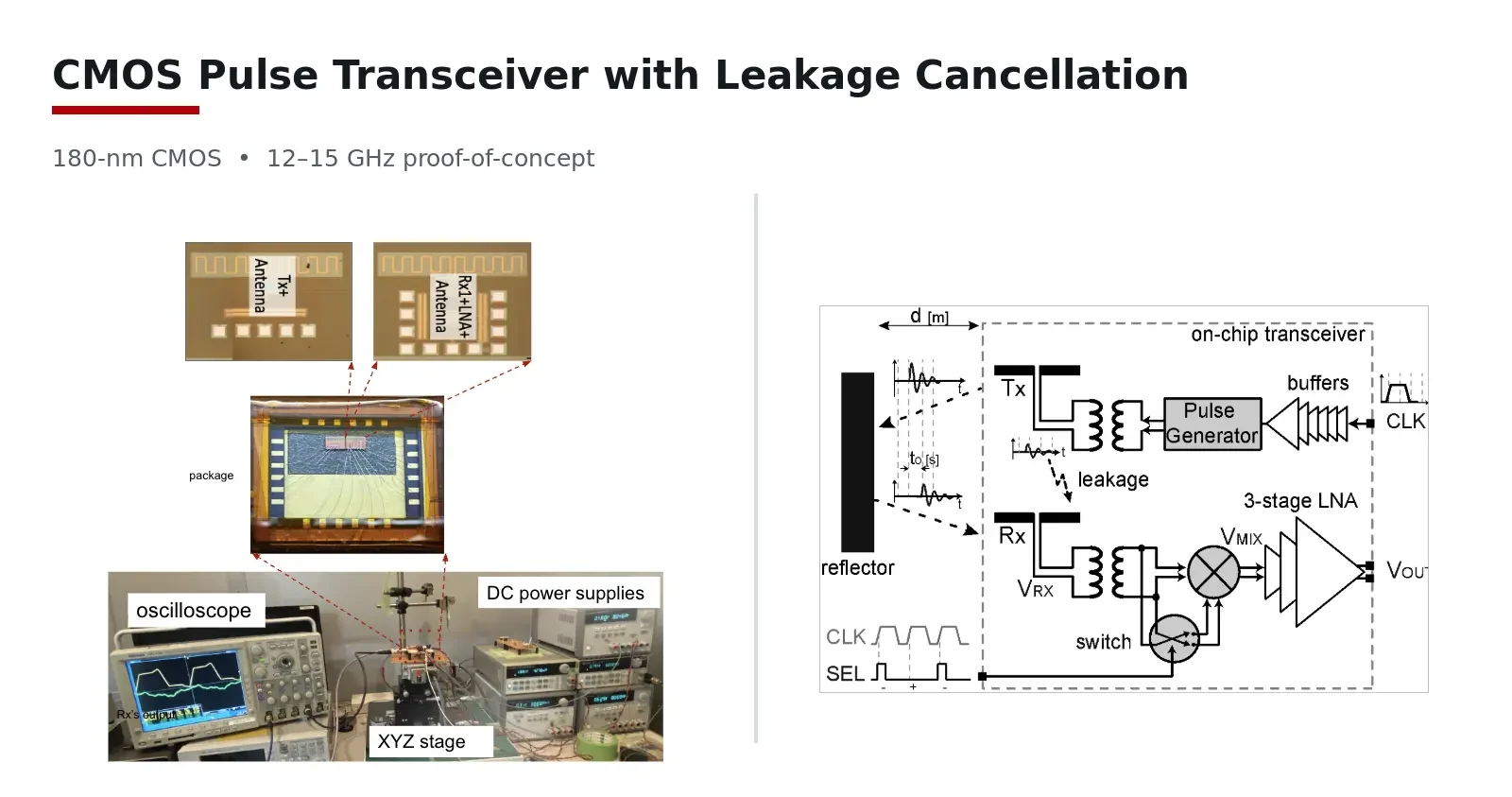
CMOS Pulse Transceivers with Integrated Antennas
Broadband pulse transmitters, receivers, and antenna arrays were integrated in CMOS and SiGe technologies for millimeter-wave sensing and active imaging. The work included on-chip pulse-delay calibration, beam-formability, leakage cancellation, and antenna–circuit co-design.
140-GHz CMOS Circuits
Research at 140 GHz demonstrated energy-efficient oscillators, modulators, and receiver architectures in 65-nm CMOS, establishing a technical foundation for emerging sub-THz communication and sensing systems.
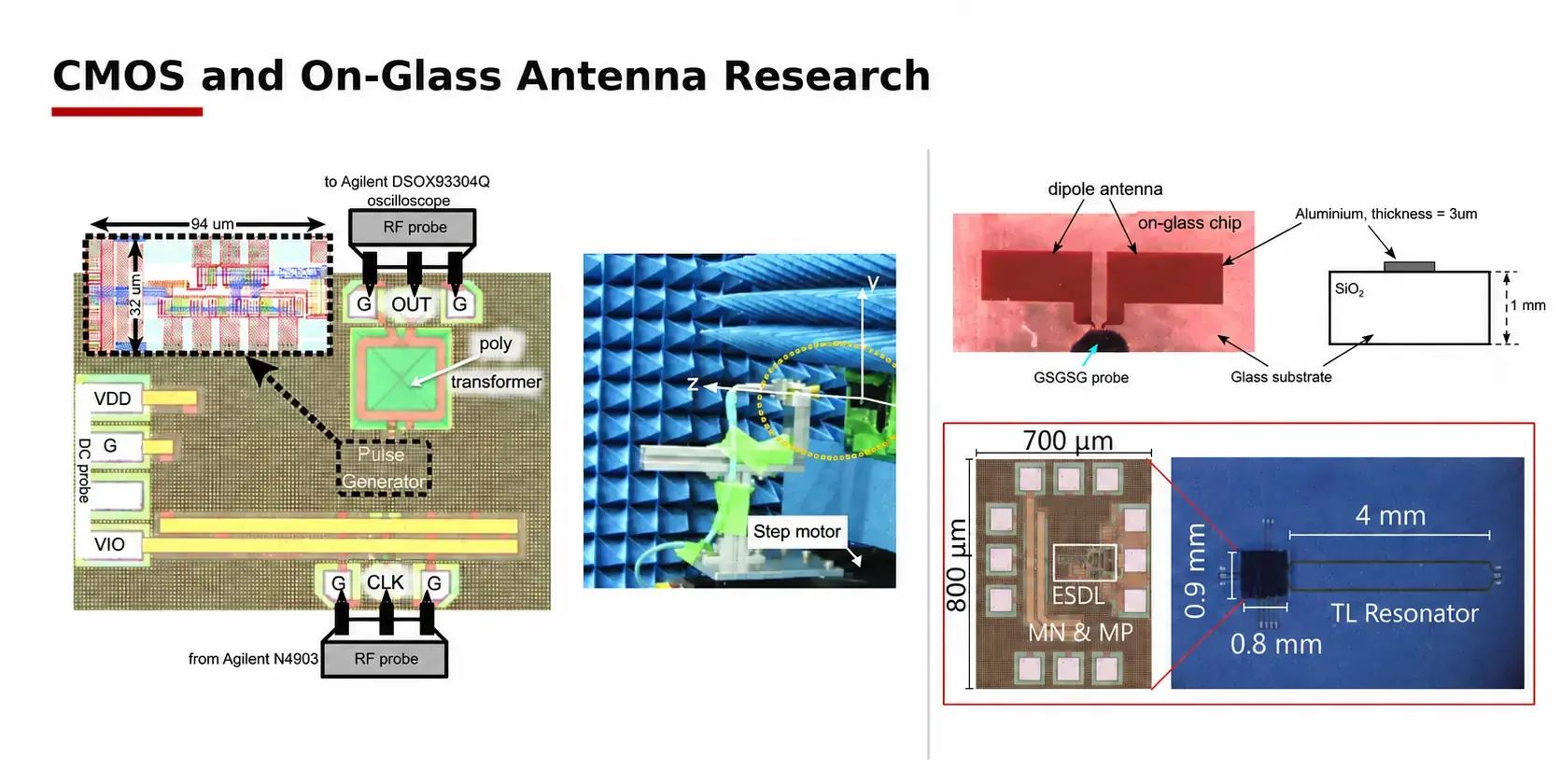
On-Silicon and On-Glass Antennas
Integrated antenna research examined silicon and glass implementations for broadband millimeter-wave systems, including CMOS-on-glass pulse generators, antenna arrays, and near-field measurement structures.
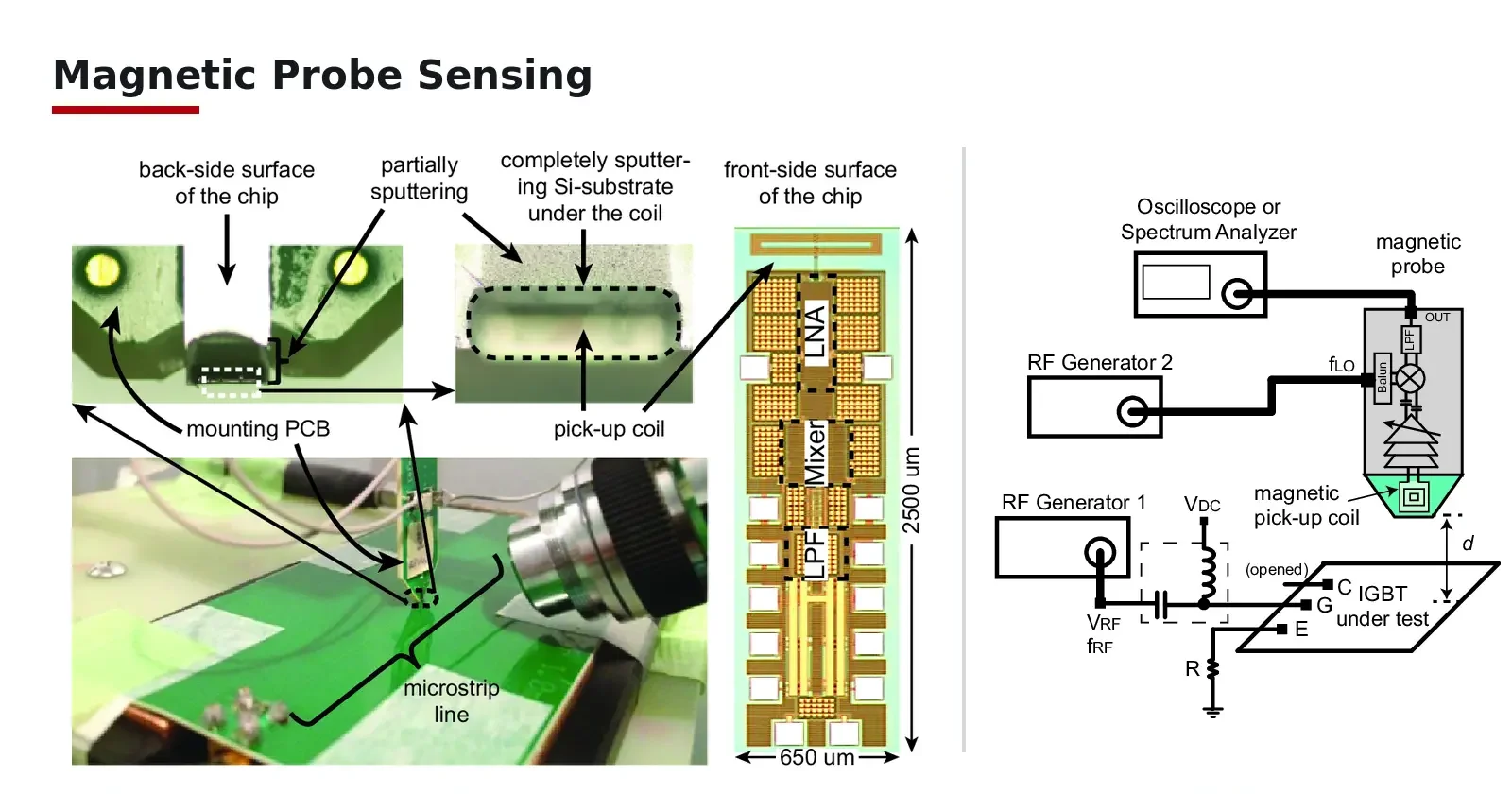
Near-Field Magnetic Probes
High-sensitivity integrated magnetic probes were developed for non-invasive IC measurements, hardware-security analysis, power-network characterization, and localization of faults in semiconductor power devices.
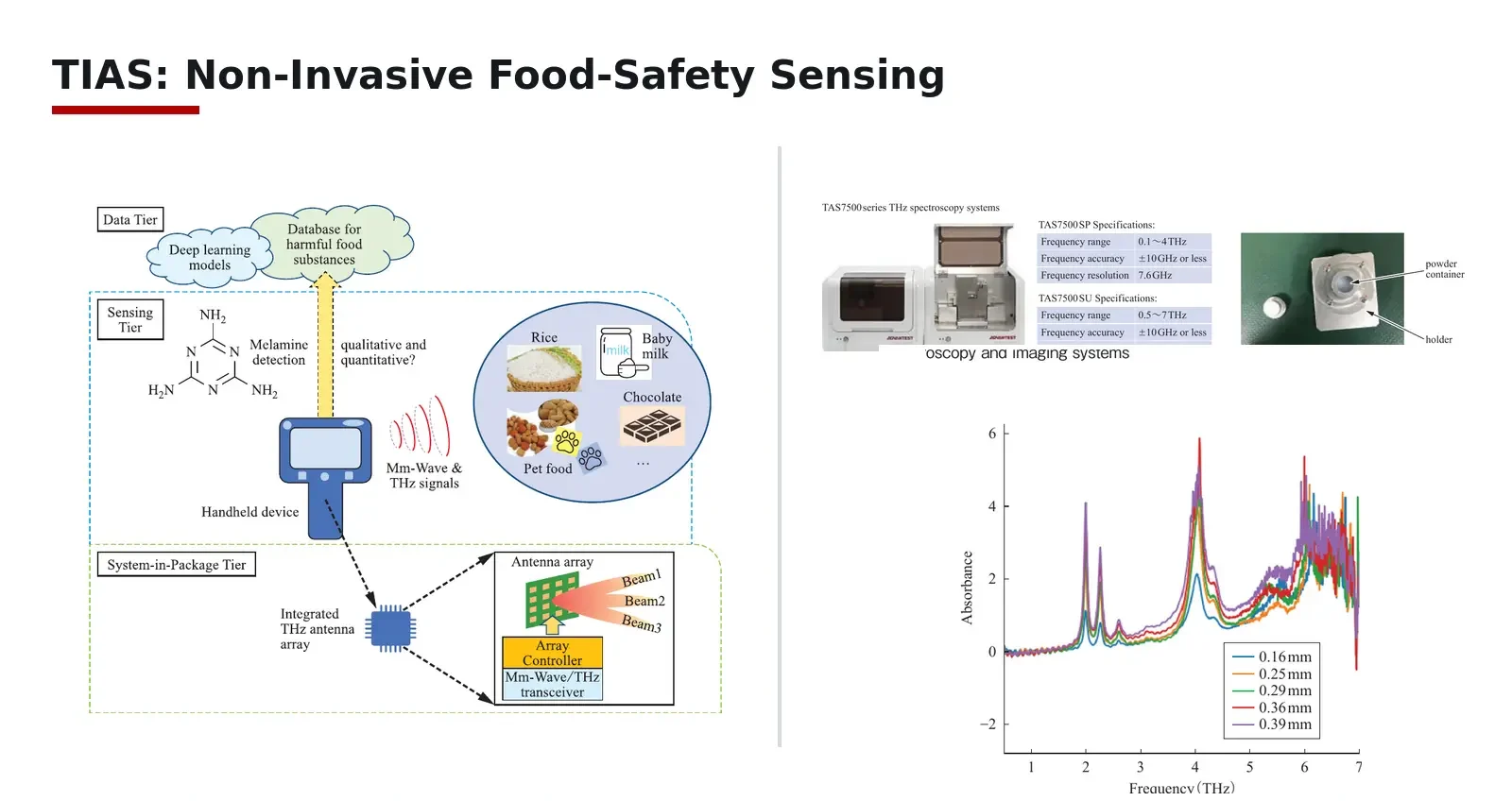
mm-Wave and THz Food-Safety Sensing
Wide-frequency scanning from microwave through THz bands was investigated for non-invasive detection and classification of contaminants in agricultural and food products.
AIoT Aquaculture Systems
Multimodal platforms integrating water-quality sensors, acoustic monitoring, wireless connectivity, and data-driven analysis were developed to support resilient and intelligent aquaculture.
Emerging Directions
- 140-GHz and sub-THz links for chiplets and AI computing systems
- CMOS, antenna, and package co-design for heterogeneous integration
- On-chip and in-package sensing for system health and security
- Edge-intelligent biomedical and environmental microsystems
- Measurement methods for mm-wave and THz integrated technologies